
 EN
EN
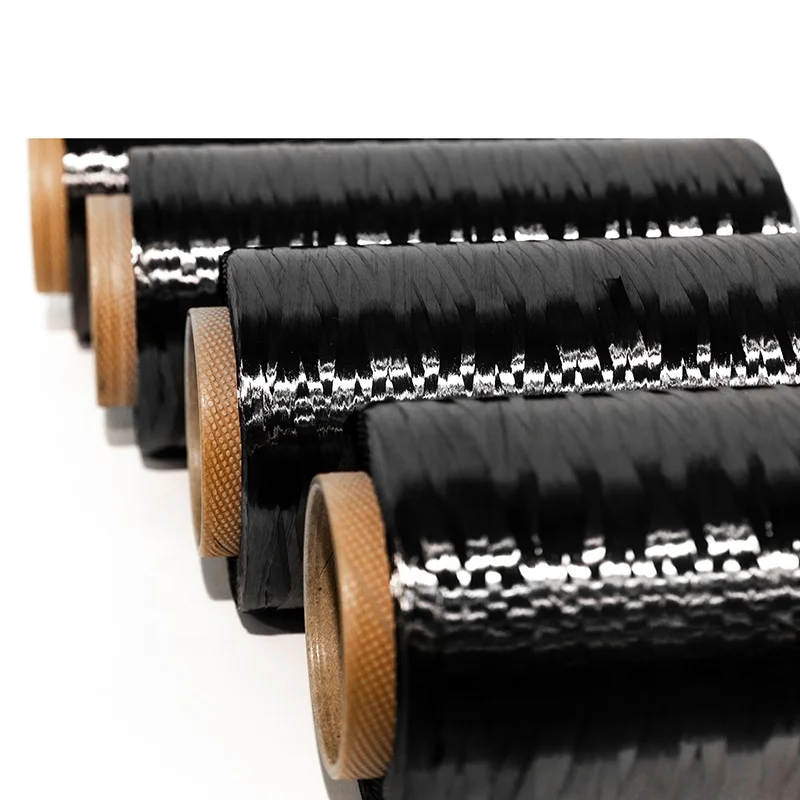
Manufacturing industries worldwide are increasingly demanding lightweight, high-strength components that can withstand extreme conditions while maintaining cost-effectiveness in large-scale production. Carbon fiber pultrusion has emerged as the manufacturing process of choice for producing continuous carbon fiber reinforced polymer components in high volumes. This advanced manufacturing technique combines the exceptional properties of carbon fiber with efficient production methods, making it ideal for aerospace, automotive, infrastructure, and industrial applications where performance and consistency are paramount.
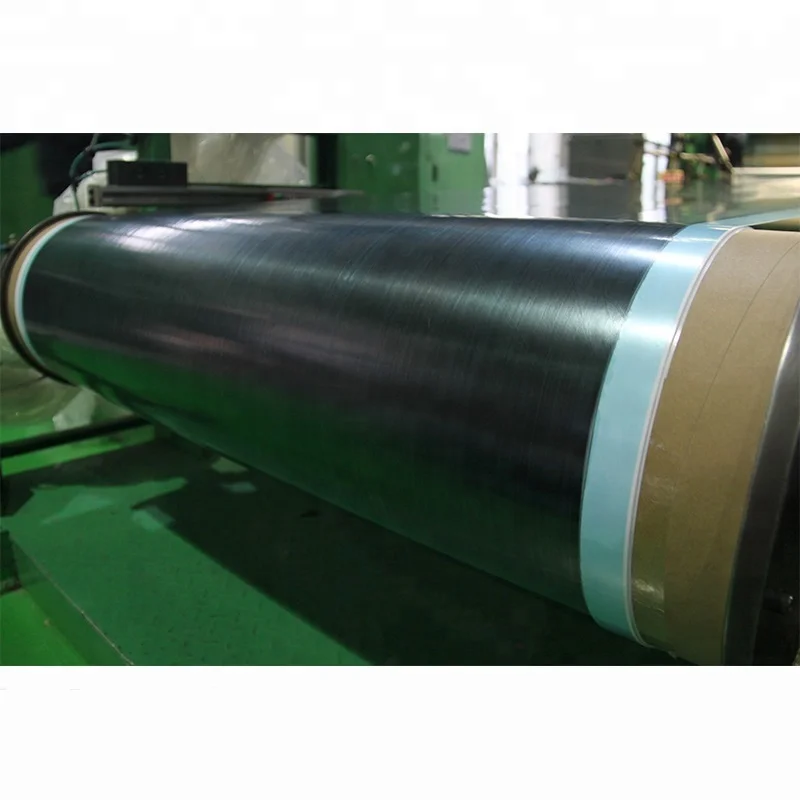
Understanding Carbon Fiber Pultrusion Manufacturing Process
Core Process Mechanics and Material Flow
The pultrusion process fundamentally involves pulling continuous carbon fiber reinforcements through a heated die while simultaneously impregnating them with thermosetting resin systems. This continuous manufacturing approach begins with carbon fiber rovings, mats, or fabrics being drawn from creels through a resin bath or injection system. The impregnated fibers then pass through a series of forming guides that shape the material before entering the heated pultrusion die.
Within the die, the resin undergoes controlled polymerization under precise temperature and pressure conditions, typically ranging from 300°F to 400°F depending on the resin system. The cured composite profile emerges continuously from the die and is pulled by a reciprocating puller system at consistent speeds. This process enables manufacturers to produce carbon fiber components with exceptional dimensional accuracy and consistent cross-sectional properties throughout the entire length.
Resin System Integration and Curing Dynamics
Successful carbon fiber pultrusion requires careful selection and optimization of resin systems that can achieve complete cure within the die residence time. Epoxy, polyester, and vinyl ester resins are commonly employed, each offering distinct advantages for specific applications. The resin formulation must provide adequate working time for fiber wet-out while achieving rapid cure kinetics under heat and pressure.
Temperature profiles within the die are precisely controlled to ensure progressive curing from the outside surfaces inward, preventing internal voids and achieving uniform mechanical properties. Advanced pultrusion systems incorporate multiple heating zones with independent temperature control, allowing manufacturers to optimize cure cycles for different resin systems and part geometries.
Advantages of Pultrusion for High-Volume Production
Production Efficiency and Throughput Capabilities
Carbon fiber pultrusion offers unmatched production efficiency for high-volume manufacturing scenarios, with continuous operation capabilities that far exceed traditional manufacturing methods. Modern pultrusion lines can operate 24 hours per day with minimal downtime, producing consistent profiles at pull speeds ranging from 12 to 60 inches per minute depending on part complexity and cure requirements.
The continuous nature of the process eliminates the cycle time limitations inherent in compression molding, filament winding, or hand lay-up techniques. This translates to significantly higher annual production volumes with lower labor requirements per unit produced. Manufacturing facilities can achieve production rates exceeding thousands of linear feet per day for standard profiles, making carbon fiber pultrusion economically viable for large-scale commercial applications.
Quality Consistency and Dimensional Control
The controlled environment of the pultrusion process ensures exceptional consistency in fiber volume fraction, void content, and mechanical properties throughout the production run. Unlike manual processes where human variability can introduce defects, carbon fiber pultrusion maintains precise fiber orientation and resin distribution through automated material handling systems.
Dimensional tolerances achievable through pultrusion typically range from ±0.005 to ±0.030 inches depending on part geometry and size, with surface finish quality that often eliminates secondary machining operations. This level of precision is particularly valuable for structural applications where component interchangeability and assembly tolerances are critical factors.
Material Properties and Performance Characteristics
Mechanical Property Optimization
Pultruded carbon fiber components exhibit exceptional mechanical properties due to the unidirectional fiber orientation and high fiber volume fractions achievable through the process. Typical fiber volume fractions range from 60% to 70%, resulting in tensile strengths exceeding 200,000 psi and modulus values over 20 million psi in the longitudinal direction.
The continuous fiber architecture inherent in carbon fiber pultrusion provides superior fatigue resistance compared to short fiber reinforced materials or woven fabric constructions. This makes pultruded profiles ideal for dynamic loading applications such as drive shafts, springs, and structural members subjected to cyclic stresses. The absence of fiber breaks or crimping within the load path maximizes the utilization of carbon fiber's exceptional strength-to-weight ratio.
Environmental Durability and Long-Term Performance
Carbon fiber pultrusion produces components with excellent resistance to environmental degradation, including moisture absorption, chemical attack, and UV exposure when appropriate resin systems are selected. The uniform resin distribution and complete fiber encapsulation achieved through the pultrusion process provides superior protection against environmental factors that can compromise composite performance over time.
Long-term testing data demonstrates that pultruded carbon fiber components maintain their mechanical properties under sustained loading conditions and temperature cycling. This durability makes them suitable for infrastructure applications where 50-year service lives are required, such as bridge reinforcement, utility poles, and architectural elements.
Cost Effectiveness and Economic Considerations
Raw Material Utilization and Waste Reduction
The continuous nature of carbon fiber pultrusion results in exceptional raw material utilization rates, typically exceeding 95% for standard production runs. Unlike prepreg lay-up processes where significant material waste occurs during trimming and cutting operations, pultrusion generates minimal scrap material since components are produced to near-net shape.
The ability to use lower-cost carbon fiber forms such as rovings and tows, rather than expensive prepreg materials, contributes significantly to overall cost reduction. Additionally, the automated fiber handling and resin impregnation systems ensure consistent resin-to-fiber ratios, eliminating the material waste associated with manual impregnation techniques.
Labor and Manufacturing Cost Structure
Carbon fiber pultrusion requires significantly less skilled labor compared to traditional composite manufacturing methods, reducing both training requirements and labor costs per unit produced. The automated nature of the process allows a single operator to monitor multiple production parameters and maintain consistent quality output.
Capital equipment costs for pultrusion lines are generally lower than compression molding or autoclave systems of equivalent production capacity. The continuous operation capability and high utilization rates achievable with pultrusion equipment provide favorable return on investment calculations for high-volume production scenarios.
Applications and Industry Adoption
Aerospace and Defense Applications
The aerospace industry has embraced carbon fiber pultrusion for producing structural elements, antenna masts, missile components, and satellite structures where weight reduction and dimensional stability are critical. The consistent properties and high strength-to-weight ratios achievable through pultrusion make it ideal for applications requiring strict quality certifications and performance specifications.
Defense applications leverage the electromagnetic transparency of carbon fiber pultruded components for radar and communication systems, while the corrosion resistance provides advantages in marine and harsh environment deployments. The ability to produce complex cross-sectional shapes through pultrusion enables designers to optimize structural efficiency and reduce part count in assembly operations.
Automotive and Transportation Markets
Automotive manufacturers are increasingly adopting carbon fiber pultrusion for drive shafts, leaf springs, bumper beams, and structural reinforcement components. The high-volume production capabilities align well with automotive industry requirements for consistent quality and cost-effective manufacturing processes.
The lightweight properties of pultruded carbon fiber components contribute directly to vehicle fuel efficiency improvements and emissions reduction goals. Additionally, the design flexibility offered by pultrusion allows engineers to create components with optimized cross-sections that provide maximum performance benefits while minimizing weight and material usage.
FAQ
What fiber volume fractions can be achieved with carbon fiber pultrusion?
Carbon fiber pultrusion typically achieves fiber volume fractions between 60% and 70%, which is significantly higher than many other composite manufacturing processes. This high fiber content directly translates to superior mechanical properties and structural efficiency. The precise control over fiber tension and resin flow in the pultrusion process enables consistent achievement of these high volume fractions throughout the production run.
How does production speed compare to other composite manufacturing methods?
Pultrusion offers continuous production at speeds ranging from 12 to 60 inches per minute, depending on part complexity and cure requirements. This represents a significant advantage over batch processes like compression molding or autoclave curing, which require cycle times measured in hours rather than continuous throughput. The continuous nature eliminates the downtime associated with loading, heating, and cooling cycles common in other processes.
What are the typical dimensional tolerances achievable through pultrusion?
Pultruded carbon fiber components can achieve dimensional tolerances ranging from ±0.005 to ±0.030 inches depending on part size and geometry. These tight tolerances are maintained consistently throughout production runs due to the controlled die environment and automated pulling system. The precision achievable often eliminates the need for secondary machining operations, reducing overall manufacturing costs.
Can complex cross-sectional shapes be produced through pultrusion?
Yes, pultrusion can produce a wide variety of cross-sectional shapes including hollow sections, I-beams, angles, channels, and custom profiles tailored to specific application requirements. The die design flexibility allows engineers to optimize cross-sections for structural efficiency, weight reduction, and functional requirements while maintaining the benefits of continuous production and consistent quality.